Tyler Lewy
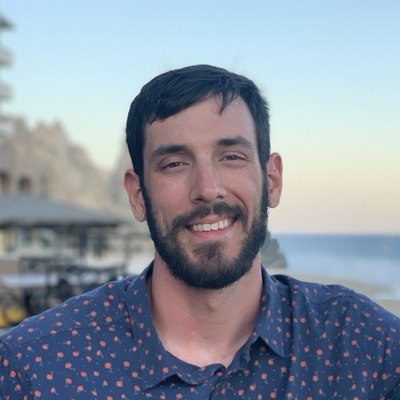
Neurovirologist at NIAID's Rocky Mountain Laboratories
I'm interested in how the brain coordinates its response to lethal human pathogens, and in what frontier models can and can't do with that kind of knowledge.
- Doctorate
- Ph.D.Virology, Rockefeller University
- Experience
- 12 yrVirology, including BSL-3 containment
- Publications
- 09Five as first author
- Citations
- 446Google Scholar (opens in a new tab), Aug 2026
Bench science, and the language to explain it.
I work on how the brain orchestrates protection against lethal human viruses. In practice that has meant West Nile, Powassan, yellow fever and SARS-CoV-2, all of it under BSL-3 containment. My dissertation at Rockefeller began with a question nobody in the lab was working on, and ended as a first-author paper in Immunity describing a signaling network that puts the brain into a defensive state before an infection ever arrives.
Working under containment requires balance. Protocols must be safe enough to prevent accidents or misuse, yet not so restrictive they hinder productive research. That same framework is critical to frontier AI. When a model answers a question about a pathogen, it raises two questions. One, does the answer contain real uplift or a plausible-sounding dead end. Two does the uplift present new dangers in the hands of a bad actor. My high-containment virology background makes me uniquely suited in the artificial intelligence space to help make that call.
But over a decade of biomedical research has taught me that the greatest findings at the bench mean nothing if you cannot communicate them to the world. Scientific writing is an underappreciated skill. It's one thing to write a paper your peers will understand. It's far more difficult to write a piece your mother-in-law can also digest. I lectured for the Biomedical Research After-School Scholars program at Rocky Mountain Laboratories, breaking down complex virology and epidemiology concepts into lab modules for middle school students, and I've advised multiple trainees, several with no prior biology experience, through graduate rotations, summer projects, and post-baccalaureate work. The writing below is the same skill turned on my own papers.
I came to these questions from the bench, not from machine learning. Deciding whether a model's biological output is dangerous takes someone who has worked with both models, biological and computational.
Writing for the field
Research articles
- 01
-
02
J Hepatology 2026
doi (opens in a new tab) - 03
- 04
- 05
- 06
Reviews
- 07
- 08
General audience
-
09
Prized Writing 2014
UC Davis · 25:113–119
Citation metrics and the full publication record are maintained on Google Scholar (opens in a new tab).
Writing for everyone
Two examples. The first puts the published abstract of my own Immunity paper next to a plain-language version of the same finding, so you can see the input and the output at once. The second is a risk assessment: a Science paper on AI-designed bacteriophages, read against what building something dangerous would actually take.
- 01 More than a wall An alarm raised in the foot puts the brain on antiviral alert days before any virus could arrive. The blood-brain barrier turns out to be more active in immune communication than expected.
- 02 The threat of novelty A Science paper reported the first AI-designed viruses. What the result establishes, what it does not, and why the distance to a dangerous organism is longer than the headlines suggested.
Get in touch
I'm always glad to talk about viruses, neuroimmunity, biosecurity, or how AI systems handle biological knowledge.
Email · Google Scholar (opens in a new tab) · Curriculum vitae (PDF)